



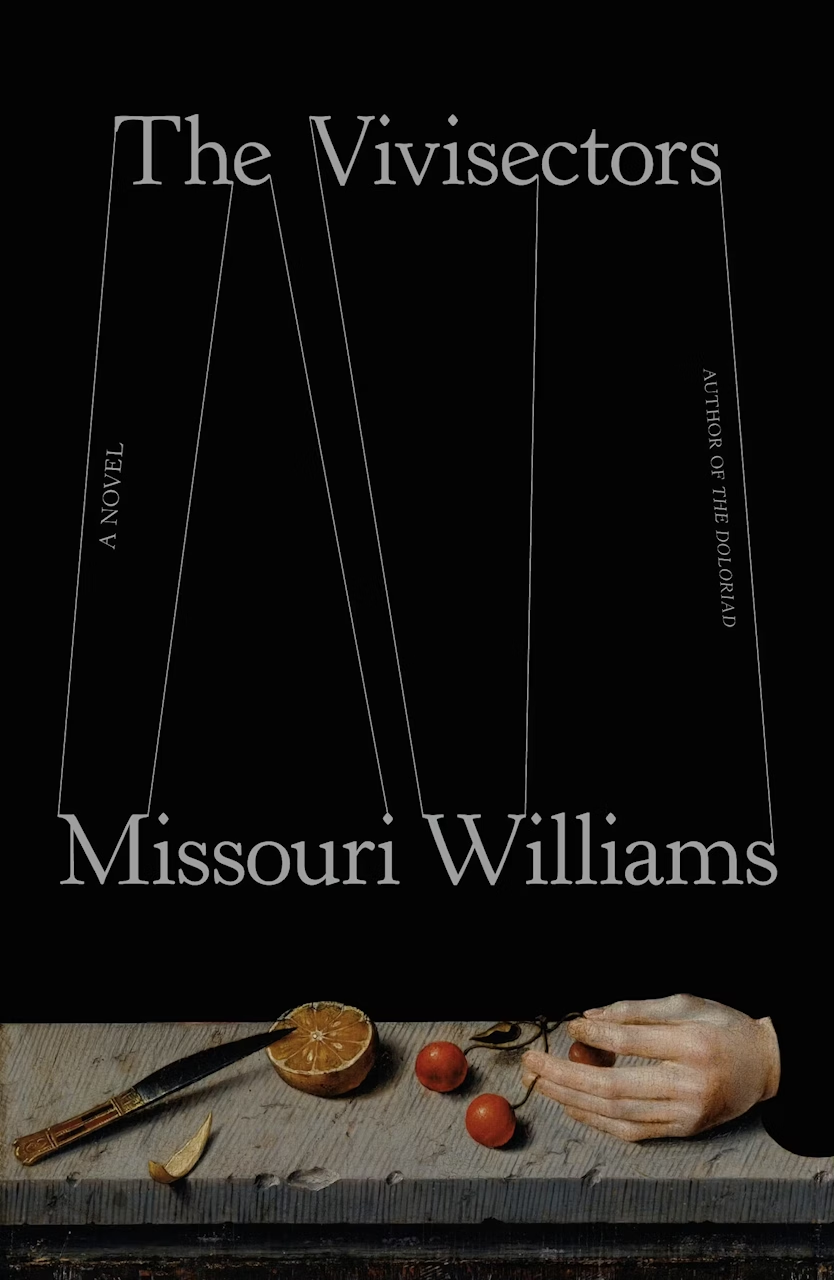
After reading the first twenty pages of Missouri Williams’ second novel, The Vivisectors (2026, Farrar, Straus and Giroux), I have posted on my Substack that, from the very beginning, Williams’ sentences feel like the thrill of tossing a blow dryer into a hot, sudsy bathtub.
Blurbed by Vulture as one of the most anticipated books of 2026, Williams’ second novel starts when Agathe’s mother attempts—and fails—to commit suicide. Working as a research assistant for her boss, one of the academic professors at the unknown university, whom she first secretly and later openly hates, Agathe is mostly a cluster of indifferent things. She lives with her uncle in the vegetation-infested town. Her father considers her a failure. Once a week, she’s forced to visit her immobile mother.
With few words to spare and seemingly bereft of feelings, Williams crafts Agathe’s aura from the inside out. Self-described as an “excellent listener because she has never said anything back,” she reads voraciously. She’s not picky while reading from her uncle’s massive library. And although she comes from a family of prominent editors, Agathe—dreamless and ambitionless—appears aloof to the privileges surrounding her. Dark sky casts over the damp city, overgrown with giant, rapidly spreading flora. A sense of dread and porous despair coils itself around the novel’s characters like hot glue, binding them not through affection but through psychological malice.
On the verge of collapse are “delapidated museums with their rows of rotting paintings, the empty streets that had entirely been given over to plant and animal life. A tree grew through two floors of an old department store. Desolate boulevards.” Beneath Agathe’s feet, even the asphalt bulges. “There were weeds everywhere.” To fuel the unease, Williams uses menacing flora as a metaphorical substance for moral decline. Soon after orchestrating a fake friendship with a disgraced student named Adam, Agathe finds herself caught in a shitstorm of unfamiliar emotions. Like weeds jutting through cracked pavement, these feelings surface violently and begin to consume her. Within the plagued town, she starts to fall into pieces no glue gun could ever repair. By the novel’s end, her crippled love-hate tempest spins out of control. Or is it a form of redemption? How could we really know?
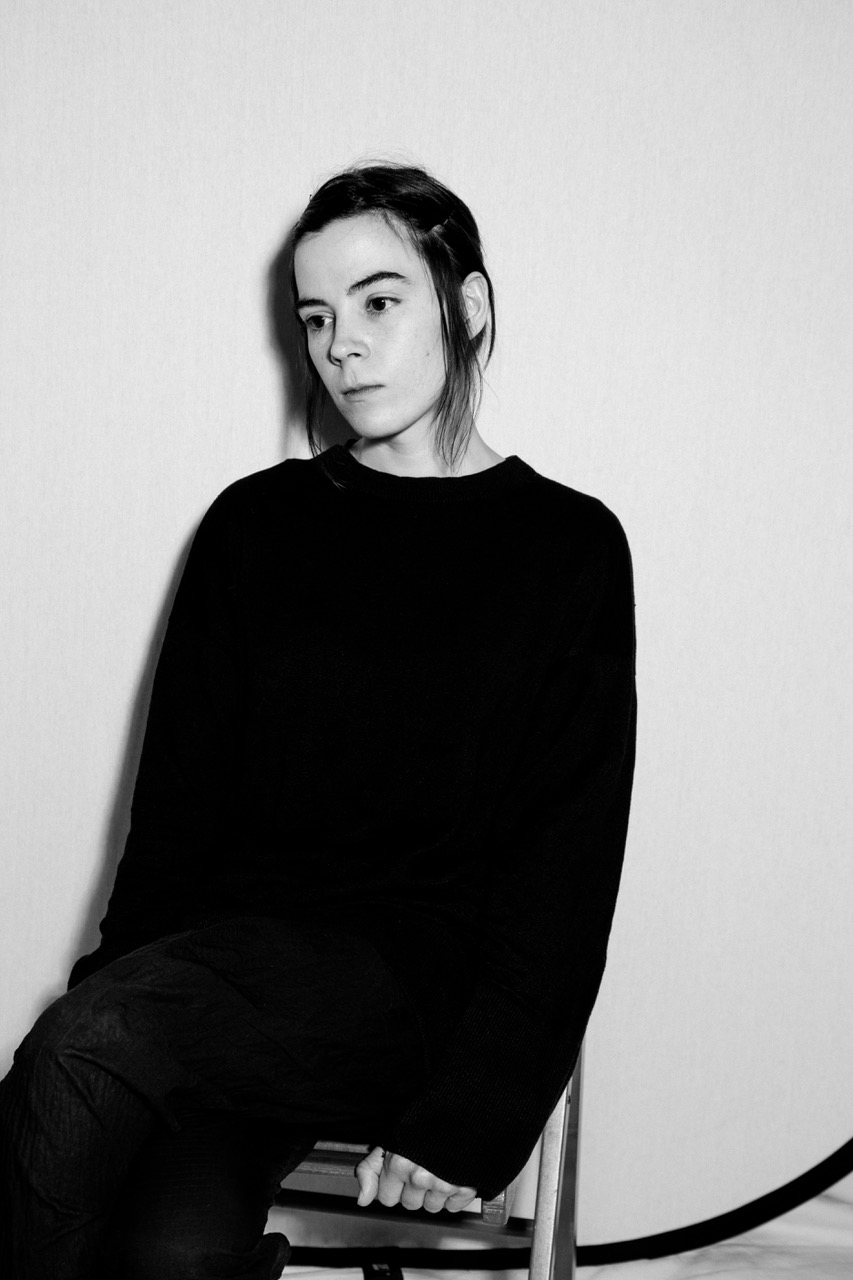
Williams’ sentences are smooth yet calibrated to crack open the psychological tantrums of outsiders. Her prose folds itself into the literary legacy of writers such as Clarice Lispector, Anna Kavan, Rachel Kushner and Ottessa Moshfegh. I spoke with Williams about writing The Vivisectors, the function of detestable characters, and why literature needs to preserve its relationship to unlikability. Missouri Williams is the author of The Doloriad, which won the 2023 Republic of Consciousness Prize, was shortlisted for the VCU Cabell First Novelist Award, and was named a best book of 2022 by Vulture. Her work has also appeared in The Nation, The Baffler, The Believer, Granta and The Drift.
Your debut novel, The Doloriad (2022), was described as “a macabre epic that interrogates the shadow cast by a family’s unyielding desire to persist.” A preoccupation with family — bizarre, fractured bonds marked by emptiness and disconnection — also runs through your new novel, The Vivisectors (2026). Are dysfunctional family structures a central premise for you as a writer?
I think so. There’s a family at the center of each of my novels so far, either the presence or absence of one, and that’s mostly true of my short fiction, too. I’m interested in the family as an enclosed domain in which people can control and shape each other with minimal outside interference. Families terrify me. I would say that the family in The Vivisectors was something new for me because of its relationship with prestige and belonging, in contrast to the degraded familial world of The Doloriad. Throughout the book, Agathe’s equally dysfunctional family is presented as something potentially enviable because of its status. A family’s relationship to status and self-preservation really interests me.
I’m curious about the process of writing The Vivisectors. How did you approach the novel? Were there other books or writers you had in mind while working on it?
I approached the book like a puzzle to be solved. The writing process was very controlled; sometimes I would think about one sentence for days. I wanted the prose to seem so smooth on the surface, for everything to be ordered and clean, nothing much to catch the eye, but at the same time for the book to be bright and jagged and withholding. I wanted to write something light and reflective but secretly weighty. There are many things hidden from both the narrator and the reader. Wanting this kind of structure meant that a lot of the writing process was often non-linear, a process of finding the connections between different aspects of the character and story, thinking about the ways that one image might rebound on another, and of being surprised by what I discovered.
“I wanted the prose to seem so smooth on the surface, for everything to be ordered and clean, nothing much to catch the eye, but at the same time for the book to be bright and jagged and withholding. I wanted to write something light and reflective but secretly weighty.”
I love so many books. Here are just a few that I was thinking about while writing and what they gave to me. Plato’s Republic for everything that it says about cities and souls. Italo Calvino’s Invisible Cities for the same reason. Greek tragedies and Gerald Murnane’s The Plains for thinking about what a chorus can do. Edmund Spenser’s Faerie Queene and The Romance of the Rose for their extended allegories and moral instruction. Nabokov’s Pale Fire and Pnin for their sense of academic triviality, the decadence of thought. Piers Plowman for the seriousness of salvation. And then John Donne’s Devotions on Emergent Occasions is a text that comes up a lot in the book itself, sort of as a touchstone for thinking about figurative language.
How did you arrive at the title? I’m asking because, after reading the novel, it seems that the characters are all, in some way, “rearrangers of other people’s things” — solving one problem, then another. Most of them fall apart. Some find refuge within the university, but almost all of them are bound by their disconnection from one another.
I was looking for a figure or image that could capture the impulse to tear another person apart through the dissection of speech, to look for what is buried beneath the surface meaning. I wanted to think about the kind of interpretive paranoia that might emerge as the disembodiment already present in a society that revolves around the transmission of speech and thought through writing, which is intensified by the movement of discourse online. Even though the internet features only intermittently throughout the novel, the type of reading it has engendered very much informs its atmosphere and world.
While reading the novel, particularly some of your most radiant sentences, I was reminded of Clarice Lispector, Anna Kavan, Rachel Kushner, and Ottessa Moshfegh. This was especially true in relation to Agathe, the main character, whose deep interiority is paired with an almost anesthetized emotional distance. She seems semi-interested, ambitionless, and detached, yet she renders the crumbling world of the city and university — suffocated by omnipresent flora — with acute detail. What was the background to writing Agathe’s character?
I wanted to write someone completely blind to their own inner reality but who aggressively believes otherwise. Agathe insists that she is a certain way but then her actions and perceptions contradict her self-interpretation; she is receptive to the world and everything in it and conveys her experience vividly and full of feeling. Anna Kavan is a real hero to me––I think of how consuming the narrator’s obsessions are in Ice, how relentlessly he is driven by his desire to apprehend the woman that he pursues in a certain way and the destruction that this leads to. I also wanted to position Agathe as the product of her surroundings. A friend described The Vivisectors as the bildungsroman of a person but also of a city. It’s explicitly concerned with the possibility of different types of growth and the difficulty of recognition. Agathe is a sceptic, not because she doubts, which is natural, but because she denies the reality of other people, which is much crueler.
“I think literature needs to preserve its relationship to unlikability, to difficult and upsetting things.”
Beyond the characters, you construct an entire country, and the power of vegetation — the flora — plays a huge role in the novel. It seems to register unease and malaise between the characters, but also a broader environmental imbalance and crisis within this imaginary world. Gardens and parks feel powerful, almost feared. Asphalt is crumbling; weeds grow through its cracks. It is always raining. The city is damp, unstable, and constantly on the verge of collapse. I imagined it somewhere in Scotland or Ireland. How did the country you come from inform the way you wrote the novel’s imaginary landscape and city?
When writing the novel I was living across so many different cities: London, Prague, Brussels, Chicago, and travelling to so many others. All of these have made their way into the setting in some way. But the damp and decline is––for me––very post-Brexit England, with crumbling, ailing infrastructure, and a generalized sense of depression accompanied by clinging to an image of a past of supremacy. That aside, it was very important to me that nothing in the novel be definitively traceable to anything in our world; I wanted each place and character to gesture in many directions simultaneously. And then the world of the novel is not that of nations, but of competing city states. If I was inspired by the places that I was living in terms of atmosphere, the political and social climate of the book draws from Ancient Greece and the warring Italian city states of the medieval period. It reflects discourses of empire that belong much more to antiquity than they do to our own time, although that’s buried there too, of course. In the world of the novel the insider-outsider dynamic is conducted along the paradigm of citizenship and participation in the life of one dominant city. But the encroachments of the natural world compound the sense that the power of this city is waning.
I loved the detail of the red tram. Was this partly inspired by the old trams in Prague?
Yes! I love the trams here, and also how blasé people are about dashing in front of them. I’m always afraid of getting run over.
Although Agatha is detached, depleted, and often unlikeable, you write her with dazzlingly cold, scornful humor. I loved her emotional atmosphere, and even her lack of empathy. She almost becomes likeable. Kirkus described your writing as “heir to writers like Ottessa Moshfegh, whose female protagonists often possess a passivity and an icy detestation of society that teeters on the brink of nihilism.” What do you think when critics compare you to such writers? And what do you think is literature’s relationship to unlikeability?
I think the novel quite self-consciously positions itself within this kind of germinal tradition, especially in the chapter where the schoolmaster rants about the state of contemporary literature and what he sees as its bloodless first-person narrators. And I agree with her argument there, which is that this mode of narrative is responding to the conditions of our time, and more than anything a kind of emptying out of the present by the movement of our attention online. After writing The Doloriad, I wanted to try my hand at something constrained to a single voice and mind, and then further hemmed in by the nature of the character doing the perceiving. At the same time, I think the book also undermines and almost parodies that perspective through its inclusion of more absurdist elements. A novel I felt a lot of kinship recently is Harriet Armstrong’s To Rest Our Minds and Bodies, which I think is almost like the ultimate realization of that form, the first-person passive female narrator exaggerated to Beckettian proportions. It was an amazing read.
I think literature needs to preserve its relationship to unlikability, to difficult and upsetting things. It doesn’t make sense to me to make the kind of moral demand of a book that one might make of a person, that it should treat its characters well, that it should only depict ‘good’ or acceptable things.
I enjoyed the novel’s unexpected, restless ending — Agatha finishes what her mother intended. Did you have other endings in mind, or was this ending clear to you from the beginning?
I knew what I wanted to happen, just not how I’d get there. In the end it surprised me that what she does, however outrageous, feels like part of her growth, that she finally does something for another person, however contra the laws of society. She respects her mother’s desire to author her own ending.
Beyond literature, I was also reminded of Lucrecia Martel’s film The Headless Woman, a mysterious story about a middle-aged dentist, Vero, who enters a peculiar psychological state after a car accident and tries to determine whether she has killed someone. What is your relationship to cinema as a writer?
I wanted to make films long before I wanted to write books, and I hope one day I will. I see my writing as dominated by certain images. For a long time, I co-edited the film journal Another Gaze, where I worked with so many amazing writers, and the best kind of film criticism really does teach you how to write visually if you want to do justice to your object. On another note, I saw The Headless Woman years ago and still think about the way it charts the worst possible relationship to doubt. I found the film so upsetting.
Who were — and who are — your literary heroes?
Clarice Lispector. Mervyn Peake. William Gaddis. Anna Kavan. Nathalie Sarraute. Herman Hesse. Thomas Pynchon. Bruno Schulz. But I have so many more. I loved to read long before I ever thought about writing.
How is your life and writing in Prague? How does the city inform both? I’m asking because I studied and lived there for seven years, then eventually became fed up with the city. Since visiting again, however, I have fallen in love with it once more.
I have lived here longer now than I have ever lived anywhere else; it feels like home to me now. I love how green and vibrant the city is and the torrential summer rains. That sense of everything growing so rampantly in both my novels comes from my time here. I think it’s about as perfect as a city can be.
The Vivisectors is out now.